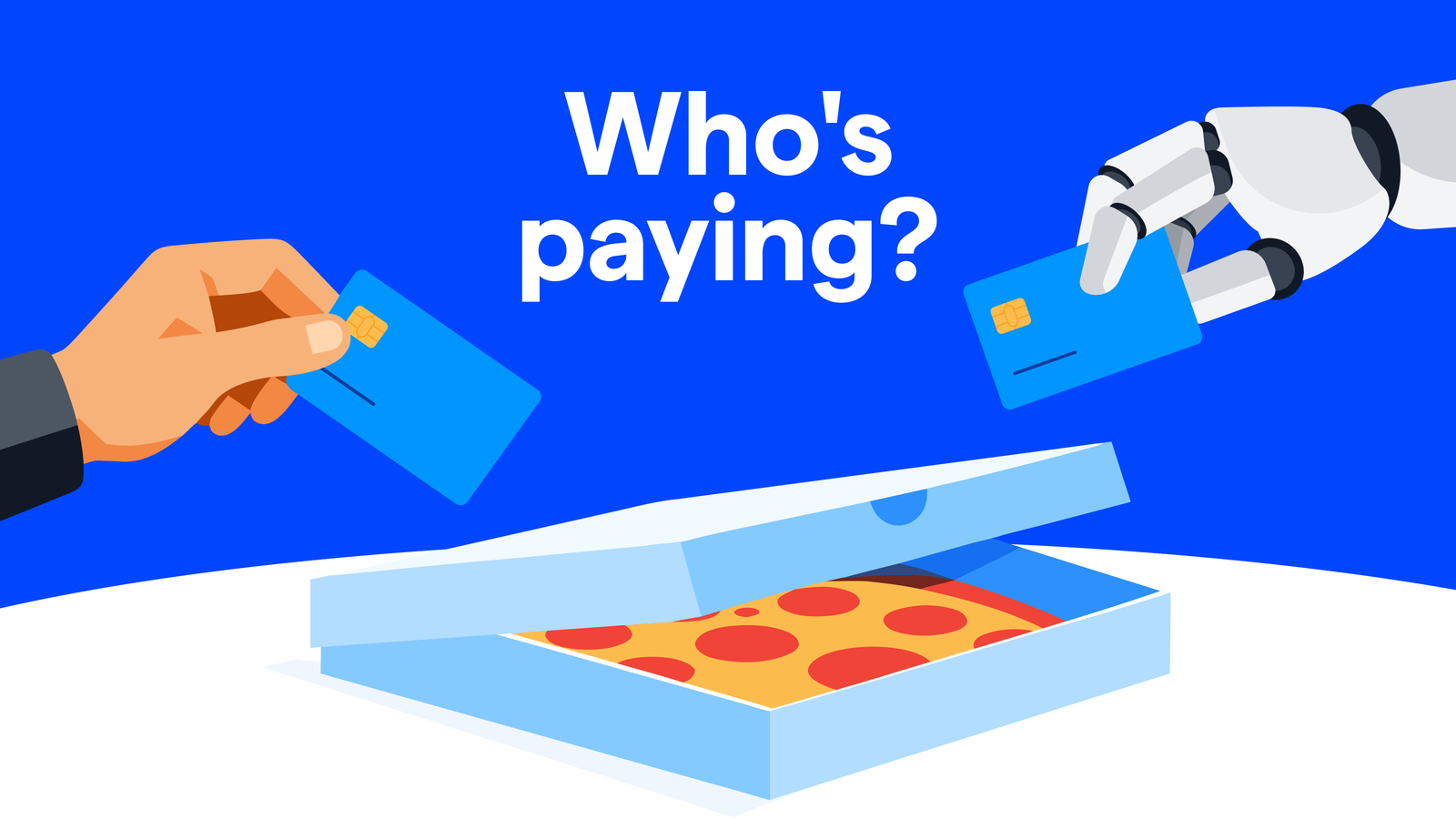
We gave AI agents our money before we gave them an identity
An AI agent can buy your pizza. It just can't prove who's behind it. Our CPO Sebastian Rodriguez on the internet's missing layer, and the race to build it.
Share
An AI deepfake has been impersonating the host of this podcast to scam his followers. He has inside contacts at X. He still cannot get the fake taken down. This is not really about deepfakes. It is about something the internet still can't do: tell you who, or what, you are actually dealing with.
On The Index podcast, host Alex Kehaya sat down with Sebastian Rodriguez, Chief Product Officer at Billions Network, to work through it.
Identity is a human right, not a corporate product
Sebastian did not come to identity for the money.
I joined because I thought identity was a human right, and I didn't want the digital identity to be owned by big corporations.
Identity is like water for a fish. It surrounds everything you do, so you never notice it, until it is gone. He makes that visible with one question:
What will happen if Google deplatforms you today? That deletes you from the entire 21st century.
This already happens. After the US sanctioned one of the judges at the International Criminal Court, her credit cards were canceled and American services started dropping her. Amazon, Google, even the Alexa at home went quiet. Everything we have built, commerce, relationships, access, sits on top of accounts a handful of companies can switch off.
The authenticator quietly became the identity. Your Google login is not proof of who you are, it is a door, but we have let the door stand in for the person. Lose the identifier and you lose everything behind it. The fix is to split them. One identity, that you can open with a Google login, a crypto wallet, a face scan, whatever. Lose one and you just use another.
If there is an economic incentive to fake it, it will be fake
Sebastian reaches back to the Cambridge Analytica years. He remembers a guy in India churning out anti-immigrant Brexit memes. No stake in UK politics. The memes just paid. Outrage got clicks, clicks made money.
Now scale that.
Anything that you can imagine now being fake, if there is an economic incentive to make it fake, it will be fake. The days of anonymous requests and open doors is going to finish, because we're going to be flooded by fake content.
The host's cloned face is not an edge case, it is the preview. So the web is starting to fingerprint everything. A new standard called Web Bot Auth, backed by Cloudflare, lets bots and agents sign their requests with a cryptographic key tied to a verified identity, so a site can sort traffic into good bot, bad bot, or human. The open internet does not disappear. It stops being anonymous by default.
What we are building at Billions Network
The aim is simple: let a human prove something is theirs without handing over their life to do it. We do not own the data. You do.
You prove you are a real person with a face scan, a national ID like India's Aadhaar, or a full ID check. Billions Network keeps none of it. Your data stays locked with your own keys, not on anyone's servers. And more than 2.5 million users have signed up, more than 12,000 agents are verified, and Billions Network already runs one of the biggest networks of agents tied to real people. It is built by the people behind Disco, Hermez and Polygon, and backed by Coinbase Ventures and Polychain.
Agents that buy your pizza
Proving who you are is just step one. It has to actually do something. So Billions Network moved to the fun part: letting your agent go out and buy things. The first pieces are already shipping.
There is a new way for agents to pay, called x402. No account, no signup, the agent just pays. Nice, until a business wants to offer a free trial. If it can't tell one agent from another, one person could grab a thousand free trials. Billions Network's x402 kits, live now, fix that. They tie each agent to one real human, so a business can hand out free trials without getting gamed.
Next up is the real thing. Your agent buys you a beer, a pizza, whatever you want. The tech is basically ready. The hard part left is plugging into Visa, Mastercard and the banks. And right now the people who want this most are the hardcore automation fans. But that is changing fast. Agents used to live in coder tools. Now they are showing up in the normal chat apps everyone already uses. Once the chat box on a website can buy things, everyone will want it. McKinsey thinks agents could be moving three to five trillion dollars a year by 2030. And the part that makes all of it trustworthy is still up for grabs right now.
The AI industry runs on FOMO
A gray beard, Sebastian says, buys you perspective. He was there for the dot-com bubble and the crypto bubble, and he is calm about the one people keep predicting for January 2027.
The dot-com bubble burst, but the internet is still here.
A lot of the big promises from the last two years might take twenty years, not two. But the money needs everyone to believe it is two, because the spending is happening now. What he does not buy is the hype treadmill.
The AI industry is running on FOMO right now. Everybody feels like if they are not using the latest shiny thing, they are missing out. A lot of the words I hear are engineered to make people feel that they are getting behind.
Everyone claims to be automating the workforce, and almost nobody is showing results. The models are leveling off and turning into plumbing. The hype jumps from one shiny tool to the next. The projects that survive will be the ones shipping stuff people actually use, not stuff that looks good on a benchmark for a week. That is the group Billions Network is building to be in.
The hardest unsolved problem: identity for agents
So here is the real question. What does identity even mean for an agent?
For a person it is physical. Your government does not really care about your name, you can change that. It ties you to your body, your face, your fingerprints. That is what stays the same. Software has no body, so none of that works. Some people say an agent's identity is just a secret key it holds. Sebastian disagrees.
Agents will have behavioral identity. If that agent becomes unreliable in the future, it cannot do that silently. That is the true identity that the industry hasn't found yet.
This is bigger than payments. An agent is pulling in information from all over, and that changes how it acts. So its identity has to be tied to how it behaves. The second it starts working against you, that shows. Nobody has built that yet. Billions Network thinks it is the real problem worth solving.
We gave agents the ability to spend before we gave them a way to be known. Closing that gap is the whole job, for people and for the agents acting for them. And it is happening now, out in the open, with Billions Network shipping toward it piece by piece.
Prove you are one of the humans. Tap your passport to your phone and see what being verified feels like: https://billions.network
Adapted from Sebastian Rodriguez's conversation with Alex Kehaya on The Index podcast, "Why the internet needs an identity layer for humans, agents, and bots before fake content buries everything real." Sebastian Rodriguez is Chief Product Officer of Billions Network, the Human and AI network. Backed by Coinbase Ventures and Polychain, Billions Network provides identity for humans and trust for AI agents across more than 2.5 million verified users and 12,000+ verified AI agents.
Get this in your inbox
Product news, agent-commerce research and the occasional deep dive.