Why AI agents won’t take your job (plus: we’re hiring)
Agents can buy things. They can negotiate. They can book your flights while you sleep. So what happens to the people who used to do those jobs?
Share
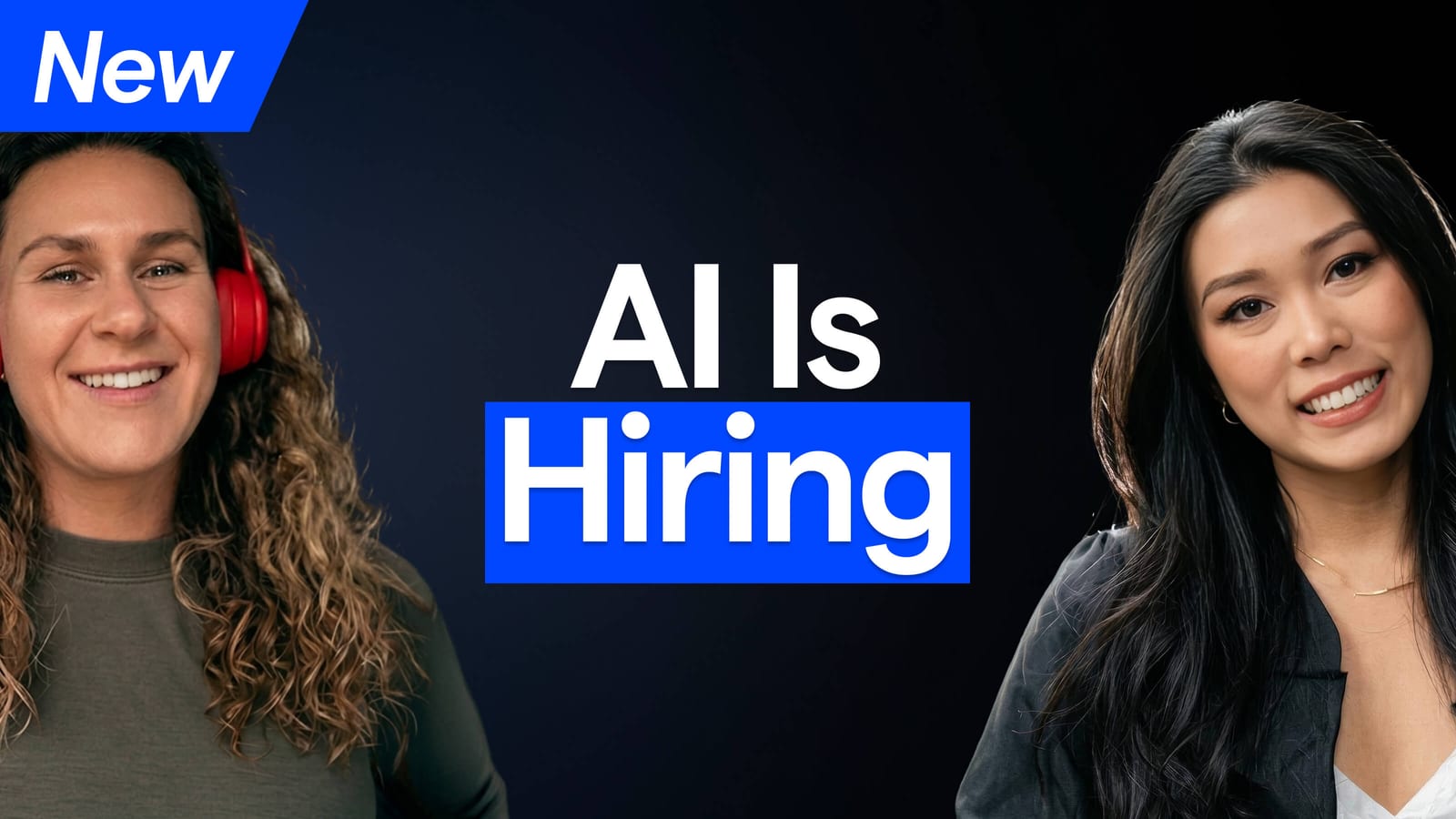
AI Is Hiring
Joanna Giang, Head of Partnerships at Billions Network, sat down with Decentraland's Maryna Altun to talk about what the agentic economy means for your career and the crucial role of Billions, as the commerce enabler for over 25,000 verified AI agents and 2.5+ million verified users, building the infrastructure that lets agents browse, shop, and buy on your behalf.
Here is what Joanna said.
I - Most people hear "AI agents" and think: "There goes my job." Is that fear wrong?
JG: Neither right nor wrong, it's incomplete.
Every major technology shift has automated certain tasks. That part is real. But it also created entirely new industries that did not exist before. When the internet went mainstream, people worried about retail jobs disappearing. Instead we got digital marketing, e-commerce managers, UX designers, creators. Entire careers nobody could have predicted 20 years earlier.
AI agents are similar. They are good at repetitive work, coordinating information, and executing tasks. But they still need humans to define goals, oversee them, build trust, and decide how much autonomy they should have.
The question is not, "Will AI replace people?" It is, "Which parts of your job can become automated, and what higher-value work does that free you up to do?"
II - You call this a technology shift, like mobile or the web. What is actually new this time?
JG: Previous software waited for instructions. AI agents pursue objectives.
Instead of opening 10 tabs to plan a vacation, you give an agent a budget, your airline preferences, and your hotel requirements. It researches, compares, asks clarifying questions, books things, and monitors prices afterward.
That is fundamentally different from software that just runs when you click it.
The other piece: agents are starting to interact with other agents. Instead of one human talking to one website, you now have networks of autonomous software coordinating with each other. That is where things get interesting.
III - Walk me through a real day. What does an agent actually do?
JG: I have been using this myself. I tell my travel agent AI I want a week in Tokyo in October, under $2,500, prioritize direct flights.
My agent starts talking to airline agents, hotel booking agents, maybe even travel insurance agents. Those agents negotiate availability, compare pricing, reserve inventory. My agent comes back with the best option. Once I approve, it books everything, adds it to my calendar, and pays for it.
The interesting part is there is not just one AI involved. It could be dozens of specialized agents working together behind the scenes. Even when I call an airline directly, guess who picks up the phone now? An AI agent.
Money moves through different payment providers, different travel companies, potentially crypto rails. Eventually it reaches the businesses providing the service. So it’s one AI agent versus me having 50 Chrome tabs open. (chuckles)
IV - When an agent does all that, where do the new human jobs show up?
JG: The future is not bots taking over the world. Humans are still 100% required for this workflow.
Someone has to build those agents. Someone has to design how humans interact with them. Someone has to define the policies: what an agent can spend, what requires approval, what data it can access. Someone has to verify identities and make sure the agent is acting on behalf of a real person. Someone has to monitor performance and step in when something goes wrong.
AI changes the nature of a lot of roles. Instead of doing the work yourself, you supervise and orchestrate systems that do the work. You become the manager of AI agents, not just the independent actor.
V - Three roles: agent developer, agentic UX, delegation manager. Which is the most underrated right now?
JG: Agentic UX.
People hear AI and immediately think engineering. But if people do not trust the experience, none of it matters. Designing how humans delegate work to AI, when an agent should ask for permission, how it explains decisions, how much autonomy feels comfortable. That is a design problem, not a technical one.
It is also one of the easiest areas to enter without a computer science background. If you understand people, workflows, operations, and product thinking, those skills become incredibly valuable here.
VI - Which jobs actually shrink or disappear?
JG: Work that is highly repetitive. Basic scheduling, simple customer support, data entry, administrative coordination. Agents can handle that increasingly well.
But automation rarely eliminates an entire profession overnight. It automates certain parts of jobs. The people who do really well are the ones who learn to work alongside technology rather than competing directly against it.
AI literacy becomes as fundamental as knowing how to use the internet or spreadsheets.
VII - What does an AI-native employee look like?
JG: An AI-native employee has workflows that automate the busy work. Not replace, automate.
Checking your email every day. Clicking through dashboards to build a marketing report. Writing briefs for your direct reports. These are repetitive tasks that eat brain power. An AI-native employee offloads them to agents and spends their time on strategy and thinking.
Instead of hiring a team of junior employees to do the repetitive work, you operate as if you already have a team under you. The agents handle the busy work. You handle the decisions.
VIII - If you were graduating today, what would you do differently?
JG: Five years ago, you went on LinkedIn, scrolled job boards, and applied. Now you have an executive assistant for every facet of your life.
AI can help you understand what you are looking for in a job. It can scrape and aggregate listings. It can continuously monitor for new roles that match your criteria and send them to your inbox. It can track your applications and follow-ups.
It automates the repetitive parts of the job search and gives you more time to think and be yourself.
IX - What is the first thing someone should do this week to prepare?
JG: Do not learn Python. Start delegating.
Pick one task you do every week. Planning meetings, researching vendors, summarizing articles, organizing travel. Try using an AI agent or AI workflow to handle most of it.
You will quickly learn what AI is surprisingly good at, where it struggles, and how to write better instructions. Think of it like an art. Your AI should be an extension of you. You can tweak it, train it, make it work the way you want.
The people who will be best at AI will not be the best programmers. They will be the people who know how to orchestrate teams that include both humans and AI. How to give an agent a performance improvement plan. How to refine and iterate.
The real skill is not competing against AI. It is learning how to manage it.
X - The bigger question: who is behind the agent?
JG: If an AI wants access to financial services, to spend money, to vote in governance, platforms need confidence that it represents a legitimate user and not thousands of fake identities.
That is the trust layer. When an agent makes a purchase or signs an agreement, someone needs to know who authorized it, whether they had the permissions, and whether it can be audited and revoked.
This is the infrastructure we are building at Billions. Verifiable identity for both humans and AI agents. Proof that every agent is tied to a real, accountable human before a single transaction happens.
AI agents can talk. They can reason. They can code.
Soon they will be able to buy things for you. And when they do, someone needs to know who is behind the wheel.
Joanna Giang leads ecosystem partnerships at Billions Network, the commerce enabler for AI agents. This interview was conducted by Maryna Altun for Decentraland.
PS: We’re hiring a visual problem solver.
To level up our visual storytelling, we’re looking for someone who thinks independently, executes end to end, and brings solutions.
Is that you? Leave a comment under our LinkedIn article.
What we expect from you:
- English proficiency (written and spoken). You’ll join team meetings in English.
- Proactive communication. We don’t ask for updates because you take the initiative.
- High-quality output. Every static and video should look like an ad we could run on TV.
- Proactive research and application of tools, tips, and workflows that improve our output. You learn from the masters in your industry.
- You think like a professional visual problem solver and execute accordingly. You’re not a pixel-pusher.
Get this in your inbox
Product news, agent-commerce research and the occasional deep dive.